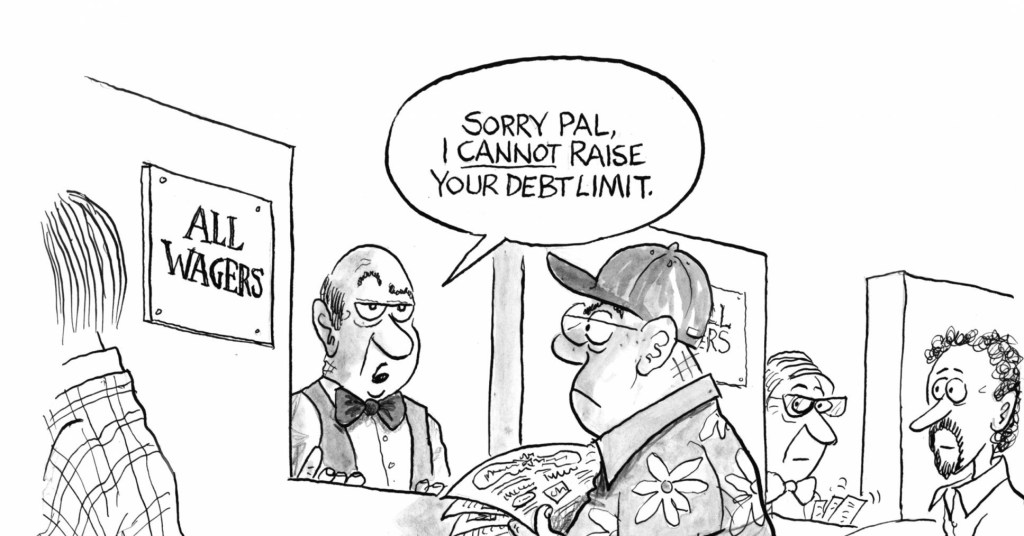
The Debt Ceiling, established in 1917 during WW1 as a limit to the amount of bonds a government could issue, it was changed in 1939 to reflect the maximum amount of debt that could be incurred. At the time, this threshold was largely irrelevant given that it would never have been reached in a million years. However, 84 years later, much has changed. The world’s powers are all interconnected through common debts, and while markets may react to something seemingly so insignificant as the Debt Ceiling, it is not without its political implications.
It is important to note however that regardless of how these debates play out on the political platform, ultimately an agreement is always reached and the Debt Ceiling will be raised at the eleventh hour. This action serves to underscore the fact that the Debt Ceiling is no longer relevant, but rather a political tool used as leverage by both sides. It is essential to understand the implications of this maneuver in order to ensure the proper utilization of resources and budgetary measures are taken. Ultimately, it all comes down to understanding how the debt ceiling works and its significance in our current world economy. Despite how the debates play out, the Debt Ceiling will always be raised as the biggest global economy cannot go without paying it’s debt as it would up end the world economics as we know it today. It is up to the policy makers to ensure they make the most responsible decision possible when it comes to managing the US debt and economic resources. Understanding the Debt Ceiling’s history and its current role in the world economy are two essential steps in setting ourselves up for success. With this knowledge, we can move forward responsibly with our fiscal decisions despite whatever politics may come our way. After all, the Debt Ceiling’s limits may no longer be applicable to our current world economy but that doesn’t mean we shouldn’t still exercise caution and good judgement when it comes to managing debt. The economic repercussions of this could have a lasting impact for generations to come if not managed appropriately. When it comes down to it, whether or not the Debt Ceiling is relevant is less important than making sure our fiscal decision is in the best interest of current and future generations. We owe this much to ourselves and those who will follow us. It’s important to not get too caught up in the politics of it all and instead focus on what is truly in the nation’s best interest. After all, that is why this was put into place 84 years ago. To ensure our debt remains manageable and does not become a larger burden than we can bear. We must be careful to stay vigilant so that it stays just that – manageable. Only then can we continue to thrive as a nation.
Therefore, whether or not the Debt Ceiling has become irrelevant over time, it still remains an important part of our fiscal responsibility and should not be overlooked when making economic decisions for our nation’s future. The long-term effects of mismanaging. Don’t let the media or politicians fool you, they need better standards in place to control this debt but to politicizes this for each party’s own resolve does not help the fundamental problem that needs to be solved. Stop holding the markets hostage because of the choices each party makes on election promises.
 @Henley Financial and Wealth Management Inc.
Leave a comment